



Dharamshala — Chinese authorities carried out a large-scale demolition campaign targeting more than 200 dwellings belonging to monks at the historic Dza Sershul Monastery (མདོ་ཁམས་རྫ་སེར་ཤུལ་དགོན་ཐེག་ཆེན་དར་རྒྱས་གླིང), located in Sershul County, Karze Prefecture, in Kham, eastern Tibet, on October 25 or 26, 2026. Sershul Monastery founded in 1760, is a renowned cultural museum and Gelug school institution that houses over 1,200 monks, provides rigorous philosophical education, holds sacred relics, and operates local humanitarian services like a hospital and elderly care home.
According to the report of the UN, EU, and the Human Rights Desk, Tibet Advocacy Section, DIIR, Central Tibetan Administration, Chinese authorities carried out a large-scale demolition campaign targeting more than 200 dwellings belonging to monks at the historic Dza Sershul Monastery (མདོ་ཁམས་རྫ་སེར་ཤུལ་དགོན་ཐེག་ཆེན་དར་རྒྱས་གླིང), located in Sershul County, Karze Prefecture, in Kham, eastern Tibet, on October 25 or 26, 2026.
The Dza Sershul Monastery founded in 1760, is the largest Gelug school Buddhist institution in the Dzachuka region of Sershul County, Karze, eastern Tibet. With six colleges specialising in Sutra and Tantra studies, it serves as a major centre of Buddhist learning and spirituality for surrounding nomadic communities. It is renowned for its rigorous philosophical education and authority to confer the Geshe degree, the highest academic qualification in Tibetan Buddhism. The monastery’s population was reported at around 500 in 2012, while more recent estimates place the number of monks at over 1,200.
This current demolition drive marks the latest in a series of severe human rights violations enacted by the Chinese government in the Sershul region. Prior state interventions include the forced removal of over 200 young monks from the monastery in 2018, the November 2019 detention of monks and laypeople protesting political propaganda, and the November 2025 mass arrest of roughly 80 residents opposing gold mining on traditional grazing lands. Collectively, these actions demonstrate a systematic campaign by the People's Republic of China (PRC) to restrict religious freedom, suppress the transmission of Tibetan Buddhist knowledge, enforce arbitrary detentions, and undermine the cultural identity, environmental rights, and traditional livelihoods of the Tibetan people.
The Chinese authorities have also demolished thousands of residences of Tibetan monks and nuns in Larung Gar, the world’s largest Tibetan Buddhist institute, since 2001. The latest wave of demolitions began in mid-July and is set to destroy 1,060 dwellings of monks and nuns. These demolitions took place following the implementation of China’s new law, so-called the “Law on Ethnic Unity and Progress,” which came into effect on July 1, 2026.
Chinese authorities further expelled Tibetan monks and nuns from the Larung Gar, in Sertar County, eastern Tibet, following a large-scale operation to demolish their living quarters that began on July 13, 2026. Furthermore, the authorities are imposing severe restrictions on the freedom of movement of monks and nuns, as well as on pilgrims and tourists to visit to the monastery. The demolitions took place following the implementation of China’s new law, so-called the “Law on Ethnic Unity and Progress.”
Under the leadership of Xi Jinping, the Chinese authorities have cracked down on Tibetans and eliminated the Tibetan language by shutting down Tibetan-run schools. Seven schools have shut down between 2021 and 2026: Sengdrug Taktse Middle School (2021), Jigme Gyaltsen Nationalities Vocational School (2024), Minthang Ethnic Vocational School (also known as the Dorje Ten National Vocational and Technical School) (2025), Hungkar Dorje Vocational High School (2026), Jasag Village Community School (2026), Ragya Grassland Girls' School (2026) and Golok Tadrak Orphanage School (2026).
China-Tibet: The one-thing you need to know:
Over the past 70 decades, there has been ongoing political repression, social discrimination, economic marginalization, environmental destruction, and cultural assimilation, particularly due to Chinese migration to Tibet which is fueling intense resentment among the people of occupied Tibet.
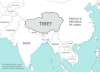
The communist-totalitarian state of China began its invasion of Tibet in 1949, reaching complete occupation of the country in 1959. Since that time, more than 1.2 million people, 20% of the nation's population of six million, have died as a direct result of China's invasion and occupation. In addition, over 99% of Tibet's six thousand religious monasteries, temples, and shrines, have been looted or decimated resulting in the destruction of hundreds of thousands of sacred Buddhist scriptures.
Until 1949, Tibet was an independent Buddhist nation in the Himalayas which had little contact with the rest of the world. It existed as a rich cultural storehouse of the Mahayana and Vajrayana teachings of Buddhism. Religion was a unifying theme among the Tibetans -- as was their own language, literature, art, and world view developed by living at high altitudes, under harsh conditions, in a balance with their environment.