

Dharamshala — When China rebrands Tibet University to "Xizang" University, it is not just changing a label—it is a deliberate political move to replace the traditional name "Tibet" with the Mandarin term "Xizang" in order to reshape global and local perception, aligning the university's identity with state-approved narratives.
The Chinese government is actively attempting to erase Tibetan identity, including its language, culture, and religion. To enforce this assimilation policy, authorities ban Tibetan language instruction in classrooms, shut down Tibetan-run schools, and arrest local intellectuals, teachers, and professors. Furthermore, the state is systematically replacing traditional names with Mandarin alternatives—such as forcibly rebranding Lhasa's Tibet University as 'Xizang University'—and removing Tibetan scriptures from public shops, restaurants, and schools.
Simultaneously, the Chinese government is attempting to rewrite Tibetan history by manufacturing false state narratives. Authorities actively penalize and accuse Tibetans of "separatism" when they present the truth in literature and cinema. A prominent recent example is Beijing's heavy state-media condemnation of the groundbreaking independent "film Four Rivers Six Ranges". Directed by Shenpenn Khymsar, the historical drama tells the authentic story of ordinary Tibetans who rose up in 1958 and 1959 to defend their homeland, Tibet and protect His Holiness the Dalai Lama's escape to India—a true narrative that Chinese state media has aggressively accused of "distorting historical reality".
The Chinese government’s forced assimilation policies are no longer implementing within Tibet’s borders only; they have expanded into a global campaign targeting international cultural institutions. Beijing is actively using its diplomatic and economic leverage to pressure prominent museums in France and England to alter historical records. By demanding that the word 'Tibet' be replaced with state-approved terms like "Xizang" or vague labels like "Himalayan World" on exhibition plaques, the Chinese regime is attempting to sanitize its occupation and rewrite Tibetan history on the global stage.
Beyond removing public scriptures and renaming landmarks, the Chinese government is executing a deep, structural rebranding of Tibet by systematically dismantling the physical and spiritual foundations of its civilization. Under the guise of "Sinicizing religion" and enforcing "ethnic unity," Beijing has deployed heavy machinery to demolish thousands of sacred monastic dwellings and stupas at world-renowned Buddhist institutes like Larung Gar, while mandating that ancient Tibetan sacred texts be forcibly translated into Mandarin. Monks and nuns are subjected to intense political re-education, forced to pledge allegiance to the Communist Party, and prohibited from possessing images of His Holiness the Dalai Lama, as the state aggressively asserts its own authority to appoint future spiritual leaders.
The Chinese government forcibly separated nearly one million Tibetan children—accounting for roughly 78% of school-aged youth—from their families and tradition, religion. Inside these highly regulated institutions, children as young as four years old are subjected to a total immersion environment where the Tibetan language is completely banned, traditional customs are restricted, and instruction is conducted exclusively in Mandarin alongside state-mandated political propaganda. By severing the everyday connection between children and their parents, the state effectively halts the natural intergenerational transmission of Tibetan language, culture, and unique Buddhist spiritual values. This systemic model of forced separation has drawn severe international condemnation from the United Nations and human rights organisations, who warn that the primary objective of these schools is the permanent psychological and cultural re-engineering of the next generation of Tibetans into loyal, fully integrated subjects of the Chinese Communist Party.
China-Tibet: The one-thing you need to know:
Over the past 70 decades, there has been ongoing political repression, social discrimination, economic marginalization, environmental destruction, and cultural assimilation, particularly due to Chinese migration to Tibet which is fueling intense resentment among the people of occupied Tibet.
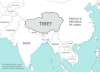
The communist-totalitarian state of China began its invasion of Tibet in 1949, reaching complete occupation of the country in 1959. Since that time, more than 1.2 million people, 20% of the nation's population of six million, have died as a direct result of China's invasion and occupation. In addition, over 99% of Tibet's six thousand religious monasteries, temples, and shrines, have been looted or decimated resulting in the destruction of hundreds of thousands of sacred Buddhist scriptures.
Until 1949, Tibet was an independent Buddhist nation in the Himalayas which had little contact with the rest of the world. It existed as a rich cultural storehouse of the Mahayana and Vajrayana teachings of Buddhism. Religion was a unifying theme among the Tibetans -- as was their own language, literature, art, and world view developed by living at high altitudes, under harsh conditions, in a balance with their environment.