


Dharamshala — Chinese authorities forcibly removed centuries-old Tibetan prayer flags (Dajong) from homes and sacred spaces in Chikar, Eastern Tibet, replacing them with the red national flag of China. The enforcement is part of an aggressive, state-mandated assimilation drive aimed at dismantling Tibetan culture.
According to a reliable source to TPI, in August 2026, Chinese authorities targeted traditional Tibetan spiritual sites, removing centuries-old prayer flag poles and replacing them with the red flag. This is part of a strategy by Beijing to dismantle Tibetan cultural, religious, and linguistic identity.
The forced removals have caused deep distress within local families. For the community’s elders—including one local grandmother who wept as her family's flag was torn down—these flags are not mere fabric. They represent generations of religious faith, ancestral memory, and an unbroken spiritual tradition carried forward by Tibetans for centuries.
Beijing's systematic campaign to eliminate every visible marker of distinct Tibetan identity directly violates both the Chinese Constitution—which explicitly promises to protect minority cultures—and international human rights law regarding freedom of belief and cultural preservation.
Under the Sinicization policies of the Chinese government, an estimated one million Tibetan children have been placed into state-run, colonial-style boarding schools where the curriculum is taught exclusively in Mandarin. To further disrupt cultural continuity, authorities have enacted strict bans preventing Tibetan minors from entering monasteries or ordaining as monks. These measures effectively cutting off the younger generation from their traditional heritage.
Community members or monastics who openly protest the destruction or attempt to share photos of the demolitions outside of Tibet face arbitrary detention, beatings, and forced attendance at political education sessions centered on "Xi Jinping Thought"
"There is no traditional culture, no national identity. This is the strategy to destroy the name of Tibet. The generations-old flagpole was removed and replaced with a red flag," the source told TPI.
in Matoe County, traditional outdoor altars and furnaces used by nomads for Sang-sol (fragrant juniper smoke offerings) have been dismantled, replaced by state-installed emblems or surveillance checkpoints.
Local bureaus regularly order the clearance of prayer flags from mountain passes, riverbeds, and hilltops under the guise of ecological protection, claiming the synthetic fibers or large concentrations are "not environmentally friendly".
Chinese authorities in northern Tibet destroyed large numbers of Mani stone piles (Dobang), prayer flags, and Lung-Ta (wind horses), which embody a spiritual tradition of carving mantras on stones and inscribing sacred mantras on colored cloth. This act not only violates religious freedom but also constitutes psychological torture for Tibetans who have long followed the custom of circumambulating Mani piles to accumulate merit and perform good deeds.
China-Tibet: The one-thing you need to know:
Over the past 70 decades, there has been ongoing political repression, social discrimination, economic marginalization, environmental destruction, and cultural assimilation, particularly due to Chinese migration to Tibet which is fueling intense resentment among the people of occupied Tibet.
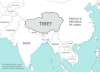
The communist-totalitarian state of China began its invasion of Tibet in 1949, reaching complete occupation of the country in 1959. Since that time, more than 1.2 million people, 20% of the nation's population of six million, have died as a direct result of China's invasion and occupation. In addition, over 99% of Tibet's six thousand religious monasteries, temples, and shrines, have been looted or decimated resulting in the destruction of hundreds of thousands of sacred Buddhist scriptures.
Until 1949, Tibet was an independent Buddhist nation in the Himalayas which had little contact with the rest of the world. It existed as a rich cultural storehouse of the Mahayana and Vajrayana teachings of Buddhism. Religion was a unifying theme among the Tibetans -- as was their own language, literature, art, and world view developed by living at high altitudes, under harsh conditions, in a balance with their environment.