




Dharamshala — Chinese authorities permanently shut down the Gangjong Girls' Middle School in Golok, eastern Tibet, in last month. It was founded in 2005 by the revered educator Jigme Gyaltsen, the school was uniquely designed to empower young nomadic Tibetan girls through an education rooted in their native language and culture.
According to a reliable source, the Gangjong Grassland Girls' Middle School (གངས་ལྗོངས་རྩྭ་ཐང་བུ་མོའི་སློབ་གྲྭ།) was forcibly shut down in September, 2026. This closure is part of Beijing's aggressive assimilation policy, shutting down independent Tibetan-run schools and cutting off young girls from their native language, culture, and traditions.
The Gangjong Grassland Girls' School founded in September, 2005 by the highly respected monk, scholar, and social reformer Jigme Gyaltsen, the Gangjong Grassland Girls' Middle School was established as a revolutionary step forward for women’s literacy in the remote nomadic regions of the Amdo Region. Historically, young girls in these rural farming and pastoral communities faced severe barriers to education. Jigme Gyaltsen designed this school specifically to offer completely free, high-quality education to marginalized girls, providing them with tuition, housing, and meals. It quickly grew into a safe place, where young Tibetan women were empowered to achieve academic excellence without losing their cultural roots.
The Gangjong Grassland Girls' School is located in Ragya Township (རྭ་རྒྱ་གྲོང་བརྡལ), Machen County (རྨ་ཆེན་རྫོང་།), Golok (Golog), Amdo, in North-Eastern Tibet. It is a privately-run, publicly-assisted boarding school; it offering courses in Tibetan, Chinese, English, mathematics, music, art, geography, history, etiquette, and a special vocational skills course. In addition to using the Ministry of Education's standard textbooks, the school has also compiled its own textbooks, tailored to the local conditions and designed for Tibetan students. Unlike state schools, all core subjects—including mathematics, sciences, history, and literature—were taught entirely using the Tibetan language as the primary medium of instruction.
Furthermore, the Buddhist debates practiced by monks in Tibetan Buddhism have been boldly incorporated into the daily teaching at the school. Debates are used in all subjects to reinforce learning, including not only Tibetan language learning but also English, mathematics, and other courses. Therefore, every day on the lawn in front of the school buildings, one can witness this spectacular scene: hundreds of students engaging in in-depth debates on a particular topic, with applause and loud discussions echoing throughout the grounds.
The school adheres to the educational philosophy that “the education of girls is the education of mothers, and the education of mothers is the foundation of human education”.
The girls' school in the small mountain valley has become famous, attracting girls from the three regions (Kham, Amdo and U-Tsang) of Tibet, to study there.
Due to the academic excellence of its female students, in 2013, 42 students from Gangjong Grassland Girls’ Secondary School were accepted to study at a university in the United States, whilst a further 21 were given the opportunity to study at a university in Japan. At that time, the school had 500 students.
The Chinese government’s aggressive forced assimilation policy has systematically targeted and dismantled the private educational network founded by the revered Tibetan scholar and monk, Ragya Jigme Gyaltsen. His schools, the Jigme Gyaltsen Nationalities Vocational High School (also known as Gangjong Sherig Norbu Ling), was established in 1994 and provided free traditional and modern education to over 2,259 students from nomadic and farming backgrounds for three decades before authorities forced its closure in July, 2024.
Following this, Beijing targeted his secondary project, the Gangjong Grassland Girls' Middle School. This school was first stripped of its independence, converted into a state-assisted facility, and then permanently shuttered by Chinese authorities in September, 2026.
The forced shutdowns of both of Jigme Gyaltsen's acclaimed institutions followed a pattern of severe state intimidation, including arbitrary police interrogations, groundless regulatory accusations, and legal harassment aimed at suppressing the preservation of Tibetan language and philosophy. Following the final closures, the displaced students transferred into highly regulated, state-run government boarding schools. In these state facilities, independent Tibetan cultural heritage and native-language instruction are completely prohibited, ensuring that the remaining generation of youth is fully immersed in Mandarin-only curricula and state-mandated political propaganda.
China-Tibet: The one-thing you need to know:
Over the past 70 decades, there has been ongoing political repression, social discrimination, economic marginalization, environmental destruction, and cultural assimilation, particularly due to Chinese migration to Tibet which is fueling intense resentment among the people of occupied Tibet.
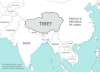
The communist-totalitarian state of China began its invasion of Tibet in 1949, reaching complete occupation of the country in 1959. Since that time, more than 1.2 million people, 20% of the nation's population of six million, have died as a direct result of China's invasion and occupation. In addition, over 99% of Tibet's six thousand religious monasteries, temples, and shrines, have been looted or decimated resulting in the destruction of hundreds of thousands of sacred Buddhist scriptures.
Until 1949, Tibet was an independent Buddhist nation in the Himalayas which had little contact with the rest of the world. It existed as a rich cultural storehouse of the Mahayana and Vajrayana teachings of Buddhism. Religion was a unifying theme among the Tibetans -- as was their own language, literature, art, and world view developed by living at high altitudes, under harsh conditions, in a balance with their environment.