



Dharamshala — The Chinese Communist government forcefully shut down another community-funded Tibetan-language school in September 2026. The school had over 300 students at the time of its closure; they were forcibly sent to state boarding schools, where only the Chinese language, Chinese culture and the ideologies of the Chinese leadership were taught.
The Chinese communist government forcefully shut down another community-funded primary Tibetan-language school named "Second Ragya Town Boarding School (རྭ་རྒྱ་གྲོང་རྡལ་བཅའ་སྡོད་སློབ་གྲྭ་ཨང་གཉིས་པ།) " in Jasag Village, Machen County, Golok, Eastern Tibet, in September, 2026.
In 1995, in order to address the difficulties faced by the children of herders in the Golok grasslands, Machen County, in accessing education, local Tibetan herders and kind hearted people committed to education jointly launched a fundraising campaign. The school was established through great effort, and was initially named the "Jasag Primary School".
The school was originally set up to accommodate the seasonal migratory movements of Tibetan herders on the plateau. It enables children to be accommodated at the school and attend lessons during periods when they are not tending their herds, allowing them to maintain their traditional way of life whilst providing children in pastoral areas with valuable opportunities for literacy and modern basic education. During this period, the school has implemented a specific teaching approach, focused exclusively on the teaching of the Tibetan language.
In 2008, following changes to the Chinese education plan, the school was officially renamed as "Second Ragya Town Boarding School (རྭ་རྒྱ་གྲོང་རྡལ་བཅའ་སྡོད་སློབ་གྲྭ་ཨང་གཉིས་པ།) "and became the only full-time boarding school in Machen County to continue the tradition of ‘herding whilst studying’.
Although this school is smaller than state schools, it has achieved remarkable academic results. By providing high-quality teaching in mathematics, sciences and traditional Tibetan culture and arts in the Tibetan language, it has enabled its students to acquire an exceptionally solid foundation in Tibetan, and its academic results have earned it a certain reputation throughout the Golok area.
After 2021, as China stepped up the implementation of its "national standard language (Putonghua) and script policy" in Tibet, particularly in Kham and Amdo, the Second Ragya Town Boarding School, like other private schools providing education in Tibetan in the region, underwent a radical reorganisation. Administrative control of the school was gradually taken over by the state, and it was forced to change its status from a private institution to one “privately run and state-subsidised”; its curriculum and teaching standards were forcibly revised to conform to the model of ordinary state schools, where only Mandarin is taught.
Although the school had already compromised and switched to teaching in Mandarin, it was still unable to escape the wave of ‘school closures and mergers’ and ‘centralised boarding’ being vigorously promoted by the Chinese government to eradicate local, privately run ethnic minority education. In September, 2026, the school was permanently closed by the Chinese authorities, and its students were all forcible placed to large state-run boarding schools under the government’s unified control.
Under the leadership of Xi Jinping, the Chinese authorities have cracked down on Tibetans and eliminated the Tibetan language by shutting down Tibetan-run schools. Seven schools have shut down between 2021 and 2026: Sengdrug Taktse Middle School (2021), Jigme Gyaltsen Nationalities Vocational School (2024), Minthang Ethnic Vocational School (also known as the Dorje Ten National Vocational and Technical School) (2025), Hungkar Dorje Vocational High School (2026), Jasag Village Community School (2026), Ragya Grassland Girls' School (2026) and Golok Tadrak Orphanage School (2026).
China-Tibet: The one-thing you need to know:
Over the past 70 decades, there has been ongoing political repression, social discrimination, economic marginalization, environmental destruction, and cultural assimilation, particularly due to Chinese migration to Tibet which is fueling intense resentment among the people of occupied Tibet.
The communist-totalitarian state of China began its invasion of Tibet in 1949, reaching complete occupation of the country in 1959. Since that time, more than 1.2 million people, 20% of the nation's population of six million, have died as a direct result of China's invasion and occupation. In addition, over 99% of Tibet's six thousand religious monasteries, temples, and shrines, have been looted or decimated resulting in the destruction of hundreds of thousands of sacred Buddhist scriptures.
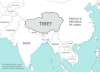
Until 1949, Tibet was an independent Buddhist nation in the Himalayas which had little contact with the rest of the world. It existed as a rich cultural storehouse of the Mahayana and Vajrayana teachings of Buddhism. Religion was a unifying theme among the Tibetans -- as was their own language, literature, art, and world view developed by living at high altitudes, under harsh conditions, in a balance with their environment.