




Dharamshala — The 18th Tibetan Parliament-in-Exile commenced in Dharamshala on Wednesday.The Tibetan Parliament-in-Exile strongly opposite to the so-called “Law on Promoting Ethnic Unity and Progress” adopted by the People’s Republic of China, which came into effect on June 1, 2026. The house stated that the legislation threatens the Tibetan people’s language, religion, culture, identity, and fundamental human rights.
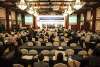
The general session of the 18th Tibetan Parliament-in-Exile, scheduled from 16 to 25 September 2026, commenced at 9:30 a.m, September 16, 2026, at the hall of the Parliament in Gangkyi, Dharamshala, H.P, India. Following the commencement announcement by Speaker Dolma Tsering Teykhang, the Speaker, Sikyong Penpa Tsering, Deputy Speaker Khenpo Sonam Tenphel, Kalons (Ministers), and Members of Parliament gathered in the Parliament Hall sang the Tibetan national anthem.
In her opening address, the Speaker congratulated the newly appointed Kalons nominated by the Sikyong and approved during the first session of the 18th Tibetan Parliament-in-Exile. She then outlined the day's brief agenda, covering obituary references, legislative amendments, resolutions, bills, and motions.
The Speaker informed the House of the Tibetan Parliament-in-Exile’s strong opposition to the so-called “Law on Promoting Ethnic Unity and Progress” adopted by the People’s Republic of China, which came into effect on 1 June 2026. She stated that the legislation threatens the Tibetan people’s language, religion, culture, identity, and fundamental human rights, before outlining its background and implications in detail.
Furthermore, she briefed the House on the 837 official appeal letters sent by the Tibetan Parliament-in-Exile to international bodies, including governments, parliaments, the UN, the EU, and global media channels. The letters highlight the severe threat China’s controversial “Law on Promoting Ethnic Unity and Progress” poses to Tibetan heritage. She concluded by updating the Members on the feedback received from these global recipients.
Furthermore, the Speaker briefed the House on a high-level parliamentary delegation, led by the Deputy Speaker, that traveled to New Delhi to engage with Indian lawmakers. Meeting with Union Cabinet Ministers and parliamentarians during the Monsoon Session in late July, the delegation lobbied extensively for Tibet. Their official appeal documents focused on two critical issues: contesting Beijing's repressive “Law on Promoting Ethnic Unity and Progress” and drawing international attention to the self-immolation sacrifice of activist Lobga Rangzen.
The House paid obituary references to Tibetan patriotic martyr Lobsang Palden (also known as Rangzen Lobga), who self-immolated in front of the United Nations headquarters, on July 2, 2026. Tributes were also paid to the late former Kalon (Kasur) Chope Paljor Tsering, renowned American Buddhist scholar Professor Robert A. F. Thurman, and former U.S. Congressman Barney Frank. The obituary references were presented by Parliamentarians Geshe Lharampa Atuk Tseten, Geshe Atong Rinchen Gyaltsen, Kunchok Chodon Juchen, and Lopon Thupten Gyaltsen.
A resolution of condolence and solidarity to the victims of the devastating floods along the Nepal-Tibet border on 26 August 2026 was presented by Sikyong Penpa Tsering and supported by Kalon Kunga Tashi of the Department of Security.
A minute of silence was then duly observed in the House in mourning those named in the obituary references.
Following this, Kalon (Minister) Tsegyal Chukya Dranyi presented a précis of the Department of Religion and Culture’s 2025–26 annual report. Parliamentarian Geshe Lharampa Atuk then delivered the Standing Committee’s review of the detailed 2025–26 annual report of the Department of Religion and Culture.