
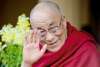


Dharamshala — His Holiness the Dalai Lama, a Nobel Peace Prize laureate, has congratulated Navanetham ‘Navi’ Pillay on being awarded the 2026 Nobel Peace Prize in recognition of her efforts to promote peace and international law. His Holiness said: "You have devoted your life to the cause of people around the world who are denied their rights."
His Holiness the Dalai Lama has written on October 10, 2026, to Navi Pillay to congratulate her on being named this year’s recipient of the Nobel Peace Prize in recognition of her efforts to promote peace and international law.
His Holiness the 14th Dalai Lama also awarded the Nobel Peace Prize in 1989, "for advocating peaceful solutions based upon tolerance and mutual respect in order to preserve the historical and cultural heritage of his people".
His Holiness the Dalai Lama wrote to Navi Pillay, "You have devoted your life to the cause of people around the world who are denied their rights. I have long believed that a country governed by the rule of law, with an independent judiciary and a free press, is best placed to serve its own people and, in turn, the wider global community. Where the rule of law is absent, injustice and suffering inevitably follow."
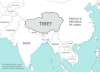
“As a Tibetan, I deeply appreciate your efforts, during your tenure as UN High Commissioner for Human Rights, to call on China to address the underlying issues in Tibet," His Holiness said.
The Norwegian Nobel Committee has announced that the 2026 Nobel Peace Prize has been awarded to Dr Navanethem ‘Navi’ Pillay, in recognition of her lifelong commitment to peace and international law. Dr Navi Pillay thus becomes the 21st woman to win the Nobel Peace Prize. A total of 21 women have received this prize, the first being Bertha von Suttner (Austria) in 1905, for writing the seminal anti-war novel ‘Lay Down Your Arms’.
Jørgen Watne Frydnes, Chair of the Norwegian Nobel Committee has announced on October 9, 2026, that the 2026 Nobel Peace Prize has been awarded to Dr Navanethem ‘Navi’ Pillay, in recognition of her lifelong commitment to peace and international law.
Frydnes said, "Navi Pillay’s commitment to universal legal principles and her firm moral compass are constants in a long career. Born into a family of Indian Tamil origin under apartheid in Durban, South Africa, Pillay became a lawyer and legal pioneer, confronting deep structural discrimination, segregation and exclusion. A common thread runs from her early work defending Nelson Mandela and others who stood up against apartheid to her service as a judge in some of the key international court cases of our time.
"This year’s laureate has significantly enlarged the scope and impact of international law. She has served as a judge on the High Court in South Africa, the International Criminal Tribunal for Rwanda and the International Criminal Court. She was the United Nations High Commissioner for Human Rights and, until recently, she chaired the UN Independent International Commission of Inquiry on the Occupied Palestinian Territory. Today Navi Pillay is a judge on the International Court of Justice in the case where Myanmar stands accused of genocide.
"In historic international court cases, she has shown that legal measures can help prevent acts of war and violence. Navi Pillay has also contributed to strengthen the institutions of international law. Her independence, expertise and steadfastness have made her one of the most respected international jurists of our time.
"In awarding this year’s Nobel Peace Prize, the Norwegian Nobel Committee wants to remind the world that the rule of law – national and international – underpins the system we have set up to ensure peace and resolve conflicts non-violently. Peace requires justice.
"History has shown that a world operating without the rule of law is unjust, unwise and inhumane. The judges – those who guard the thin red line between order and chaos – are therefore highly deserving of our praise. But today, as these same judges are sanctioned, and their institutions are attacked, we need people of courage, vision and determination – qualities that Navi Pillay demonstrates in her work on the bench.
"Navi Pillay has held states and national leaders accountable and brought hope to victims of violence and conflict. In all the positions she has held, she has stressed the responsibility of individuals and states to comply with the rule of law. She has also helped define the relevant norms and legal principles. When the International Criminal Tribunal for Rwanda established that rape and sexual violence could constitute a crime against humanity – as well as genocide – her influence was a significant factor. In the same case, Ms Pillay was instrumental in a separate legal breakthrough: for the first time, a defendant faced charges of incitement to commit genocide purely on the basis of spreading propaganda.
"The Nobel Peace Prize for 2026 springs directly from Alfred Nobel’s will. Navi Pillay strengthens fraternity between nations and – by systematically advancing the use of tribunals for peace and justice – she provides substance, direction and motivation for peace conferences in their modern form.
"Navi Pillay is one of the great defenders of international legal principles in our time. Her distinguished career reminds us of the need to support, fortify and expand the global rule of law. Navi Pillay’s commitment to justice and human dignity is a source of hope and inspiration to all who seek to bring about a more peaceful world," he concluded.
Navanethem “Navi” Pillay is judge at the International Court of Justice, she was judge to the International Criminal Court and was UN High Commissioner for Human Rights. While she was UN High Commissioner for Human Rights, she frequently and forcefully spoke out against China's systemic human rights violations in Tibet, and called on China must urgently address rights violations in Tibet, in 2012.
She firmly stated that, "social stability in Tibet will never be achieved through heavy security measures and suppression of human rights," directly challenging China's policing policies in the Tibet.
She said, "I recognise the intense sense of frustration and despair which has led Tibetans to resort to such extreme forms of protest, including self-immolation. Beijing must allow Tibetans to express their grievances without fear of retribution.”
"Independent international human rights monitors and the media must be allowed unhindered access to Tibet to investigate the reports of detentions and disappearances," she added.