

Dharamshala — The Tibet Museum, Department of Information and International Relations, Central Tibetan Administration, inaugurated its temporary exhibition “Reflections on the 40th Anniversary of the New Generation’s Peaceful Protest Movements (1987/1988/1989) at the Tibet Museum. Through archival materials, testimonies and historical accounts, the exhibition remembers the courage and peaceful resistance of a new generation of Tibetans who stood up for freedom and dignity during the historic protests of 1987–1989.
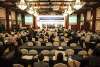
The Tibet Museum, Department of Information and International Relations, Central Tibetan Administration, inaugurated its temporary exhibition “Reflections on the 40th Anniversary of the New Generation’s Peaceful Protest Movements (1987/1988/1989) at the Tibet Museum, Gangkyi, Dharamshala, on September 14, 2026.
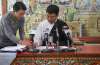
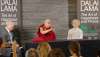
The exhibition was officially inaugurated by Sikyong Penpa Tsering, who attended as the Chief Guest. Keynote addresses were also delivered by Sikyong, Dr Tsangtruk Topla, Ven. Ngawang Woeber (Vice President of the Gu-Chu-Sum Movement Association), Dr Blake Kerr, and Mr John Ackerly. Both American speakers provided gripping, first-hand accounts of the 1987 uprisings in Lhasa. Dr Kerr, a physician, recounted treating Tibetan demonstrators wounded by the Chinese police's ruthless gunfire, while Mr Ackerly shared his experiences documenting the protests.
Dr Tsangtruk Topla, the content developer for the temporary exhibition, briefed the gathering on its overarching concept, historical significance, and core theme. Reflecting on the 40th anniversary of the peaceful protest movements (1987–1989), he emphasised the importance of remembering their history, resisting the forces of suppression, and renewing a shared commitment to preserving their legacy.
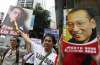
Ven Ngawang Woeber, President of the Gu-Chu-Sum Movement Association and a firsthand protestor, shared his personal reflections on the 1987–1989 protest movements. He recounted how monks from the Drepung and Sera monasteries, alongside nuns and the broader Tibetan lay community, flooded the streets to demonstrate against China's repressive policies. He highlighted that Beijing's aggressive propaganda broadcasts aimed at defaming His Holiness the Dalai Lama ultimately backfired, serving as a powerful catalyst that intensified the protests.
Dr Blake Kerr said,"When I went to Jokhang Temple, it was very crowded. One truck came in, Chinese police beating Tibetans, through their limp bodies onto the back of a truck and took off of twelve monks. The next day, John Ackerly was arrested, he had a Tibetan national flag, on his camera bag. And the Chinese pulled him, the police pulled him off the street at gunpoint. So we were interrogated for a few days. And it's very different than the interrogation in the US. The next morning was Chinese National Day. And again, there was a lot of speculation that something big was going to happen. His Holiness had been in Washington DC, and there was a lot of talk about the five-point peace plan. Then Chinese were on trucks with loud speakers broadcasting to the whole community, that saying, 'The Dalai Lama is bad', you can just imagine. On October 1st, John got up first. I was frankly terrified. I didn't know what had happened. But it was about to happen. John saw a column of smoke coming over the park court, the two-story Tibetan homes in the park court, and the smoke was coming near the JoKhang and John grabbed his camera, he went out there right away. He was in front of the police station the whole day. I did not see John the whole day. There were circulating, circumnavigating around the park court, around the JoKhang,' Free Tibet', 'China out of Tibet'. Pretty soon, about five Chinese police chiefs, full of policemen came and they grabbed as many monks as they could. They took them into the police station. The crowd was gathering to hundreds, if not a thousand. And the Tibetans, they broke the windows, they broke the door down, they pulled the furniture out, files out, just imagine the files and all the Tibetans, and burned them. And the police station started to burn to the ground.
"I came in a different route. I came to the park court square, and the park court square is not like it used to be. It used to be very open. And I was behind 60 Chinese police with AK-47s. And there was one jeep in the middle of the park court burning. On fire. And there were some people from the Lhasa Hotel that were asking, "Oh, what is going on?" So I want to find out what's going on. So I ran around the line and I came to the front of the Jokhang temple with several hundred and soon to be more hundreds in front of the Jokhang. At some point, the Chinese police were on the rooftops and they (Tibetans) were on the street. They start shooting at the crowd with AK-47s, 7 and 9 millimeter pistols. A Tibetan man, just a 25-year-old man shot through the heart, he died very quickly. There's a picture of a man carrying his 10-year-old boy. He had been shot through the heart. When I got to them, I could see what happened. I put my hands on entrance and exit wounds and he died in a very short period of time. This is not supposed to happen," the Dr Kerr said.
He further said, "A Tibetan woman was trying to pour water into another Tibetan man's unresponsive lips. He was beaten to death with a shovel inside the police station. At that point, I am just going to say, I lost it. I threw a rock at a policeman. He's aiming the child, and he's hiding behind a telephone pole. At that moment, the 60 Chinese police with AK-47s, they decided to charge the Jokhang. You hear their death cry, their warrior cry. They want to storm the Jokhang. When we met His Holiness later, he said that there had been 50 demonstrations in Tibet throughout Tibet before this demonstration, but no witnesses."
"You know the Khampa, the khampas who were at the front of the line of fire and they had taken their red tassels off. So I was with about 20 Khampas and we ran as fast as we could toward the Chinese police yelling our death cry and as they were yelling theirs. It was in a rage and the Chinese police they turned around and these unarmed people coming at them. And the khampas chased them three quarters of a mile to the cultural palace. So at that moment, it was like a feeling of freedom. There was a Tibetan flag that was flown. Of the, this is a very brief moment. There's no police. They came in at night and took away the burning buildings," the Doctor said.
Mr John Ackerly, a Board Member of the International Campaign for Tibet (ICT) and also an eyewitness to the incident said," In 1987 demonstrations were stirred by months, it was started peacefully. But then, 2008, it spread all over Tibet. And I think the next wave of resistance was the self-immolators. The resistance is it changes, every decade, people come up with new tactics because it's a different situation. Time isn't necessarily on China's side. China's population is going down. It's happening in Japan and in Korea too. And, you know, China's population could hit a low in the next, ten or twenty years. And the other thing that brings me hope, it's I've always felt, from the first moment I stepped on the plateau (Tibet), is that Tibet's altitude does not change. And the oxygen level does not change. Even climate change doesn't change the amount of oxygen in the air."
In his address, Sikyong Penpa Tsering provided a comprehensive overview of the Tibetan struggle, tracing its modern origins back to the Chinese military invasion of eastern Tibet in 1949–1950 and the subsequent enforcement of the Seventeen-Point Agreement under duress in 1951. He emphasised that despite decades of severe repression, the Tibetan spirit of resistance remains unbroken. This enduring defiance ultimately culminated in the historic 1987–1989 peaceful uprisings in Lhasa, which successfully thrust the Tibetan cause back onto the global stage and secured vital international attention.