





Conceptual Framework and Transnational Media Mandate
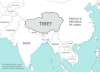
Founded in December 2007 and formally launched online in 2008, Tibet Post International (TPI) was established by a coalition of exiled Tibetan journalists in Dharamshala, India, to serve as an independent, alternative information node operating within a highly contested geopolitical space.
Grounded in a transnational commitment to democratic representation, free expression, and the defense of indigenous identity, TPI engineered a trilingual digital architecture publishing concurrently in English, Tibetan, and Mandarin Chinese. This deliberate linguistic framework functions as a strategic counter-hegemonic mechanism: while the Tibetan and English versions preserve cultural continuity and mobilize international human rights networks, the Mandarin edition directly penetrates the information ecosystem of mainland China, offering a rare, unmediated narrative to Chinese citizens. By positioning itself as the "Voice of the Voiceless," TPI systematically documents severe human rights infractions, the forced closure of private monastic and community boarding institutions—such as the recent state-mandated shutdowns of the Golok Tadrak Orphan School and the Gangjong Grassland Girls' Middle School—and the aggressive, state-enforced sinicization of local curricula. Over nearly two decades of continuous operation, the platform has transitioned from a localized exile newsletter into an essential, universally indexed digital depository containing thousands of specialized dossiers detailing the sociopolitical, ecological, and ethnolinguistic realities of modern Tibet.

Longitudinal Analysis of Audience Trajectories and Server Optimisation (2017–2023)
The quantitative expansion of TPI’s global audience reveals an intense, multi-year progression marked by sudden periods of viral acceleration followed by infrastructure stabilization:
1. The 2017 Breakthrough: TPI achieved its historical traffic peak in 2017, recording an annual baseline of more than 10 million unique visitors and 40-million-page views. Granular analytical data tracking the period from July to December 2017 reveals an unprecedented monthly density, with the platform sustaining an average of nearly 1 million readers and 21-million-page views per month, indicating an era of profound international interest in trans-Himalayan geopolitics.
2. Infrastructure Normalization (2018–2020): Following this period of explosive engagement, server logs illustrate a natural stabilization of user habits. In October 2018, viewed monthly traffic registered a baseline of 26,621 unique visitors and 5,320,515 page views, representing an extraordinarily high content consumption rate per user. By October 2019, unique audience metrics shifted upward to 31,308 visitors viewing 1,218,239 pages, while October 2020 diagnostic captures settled at 32,032 unique visitors navigating 603,186 pages as reading patterns across the platform's Content Delivery Network (CDN) normalized.
3. Audience Densification Cycle (2021–2023): In subsequent tracking intervals, the platform's readership maintained steady, resilient growth. October 2021 logs documented 31,571 unique visitors interacting with 867,723 pages, and October 2022 recorded 42,638 unique visitors across 1,012,732 pages. This cycle concluded with a significant performance recovery in December 2023, logging 37,830 unique visitors and 1,798,718 pages, establishing a remarkably deep engagement ratio of 21.41 distinct page impressions executed per individual session.
Empirical Infrastructure Analytics and Localized Server Cluster Operations (2024–2026)
Contemporary server diagnostic datasets captured between late 2024 and late 2026 demonstrate a massive operational scaling of TPI’s backend frameworks, alongside a sharp division in traffic behavior across separate localized language directories:
Primary Domain Portal Metrics (thetibetpost.com)
During the October 2024 monitoring window, the primary web server hosted 33,800 unique visitors across 46,554 total visits. Gross consumption multipliers escalated sharply, with the database handling 5,837,577 page views and a monumental monthly bandwidth draw of 1.04 Terabytes (TB). This output translates to an atypical behavioral index of 125.39-page hits per user session, confirming that visitors treat the domain as an immersive academic library rather than a casual news site. Client endpoint analysis reveals an extreme technological consolidation: 96.2% of this traffic originated within the United States (generating 5,624,103 page views), driven by severe digital containment inside Asia. Standard user setups were overwhelmingly dominated by the Windows Operating System (88.3%) and the Google Chrome browser engine (98.8%).
Localized Cluster Architecture (Jan–Oct 2026 Tracking)
A comparative evaluation of contemporary server graphs logs the distinct real-time performance of separate database sections from January to October 2026:
System Cluster A experienced acute, volatile traffic expansion in the late summer of 2026, with bandwidth consumption peaking in August at 493.04 GB under an intense wave of 5,022,936 raw server requests, sparked by breaking news surrounding regional border conflicts and mass grassroot protests. Concurrently, System Cluster B, which runs a leaner operational framework tailored for targeted language sections, observed an isolated surge in September 2026, attracting 16,928 unique visitors and 44,985 page views before returning to its standard baseline.
OPERATIONAL INTENSITY SCALING BY NODE (JAN - OCT 2026)
Search Intention, Information Security, and Asymmetric Censorship Dynamics
The structural composition of TPI's inbound traffic provides deep insights into the mechanics of state-sponsored internet containment and information warfare. Granular directory tracking shows that academic researchers, international legal watchdogs, and regional readers bypass introductory pages entirely to access deep directory categories, primarily navigating to /news/43-international, /news/3-exile, and /news/132-tibet. Historical search query parameters map intensive keyword combinations targeting highly restricted sociopolitical subjects, notably "Xi Jinping Tibet", "Joe Biden East Turkestan", and specific human rights inquiries surrounding the 11th Panchen Lama. The platform's most enduringly retrieved files consist of compressed historical documentation, including independent E-Paper files alongside sensitive historical PDFs—such as “Tiananmen Square Protests in 1989.pdf” and “The first Defender of Tibet.pdf”—which remain completely expunged from the state-controlled intranets of mainland China.
The fact that over 96% of TPI's main portal traffic is displaced into Western server environments is the direct result of the Great Firewall of China (GFW). The Chinese state employs advanced network surveillance strategies—including real-time Deep Packet Inspection (DPI), DNS cache poisoning, and automated IP-routing blockades—to completely restrict ordinary domestic citizens from accessing TPI's uncensored reporting. Because TPI bypasses standard state-sanctioned media outlets by publishing independent news directly in Mandarin, it represents a profound challenge to authoritarian information containment. Consequently, the portal faces ongoing, highly sophisticated digital intimidation. Cybersecurity data logs show a continuous wave of State-Sponsored Cyber Assaults, including Distributed Denial of Service (DDoS) actions designed to crash TPI’s infrastructure, server injection attempts, and coordinate information flooding operations across external social software designed to drown out independent Tibetan reporting with noise. Through this asymmetric conflict, TPI's massive digital archive remains a vital, resilient stronghold of historical memory and independent reporting, preserving the uncensored voice of Tibet for a global audience.